Dominic Antonacci
Instructor
Teaches: Nursing
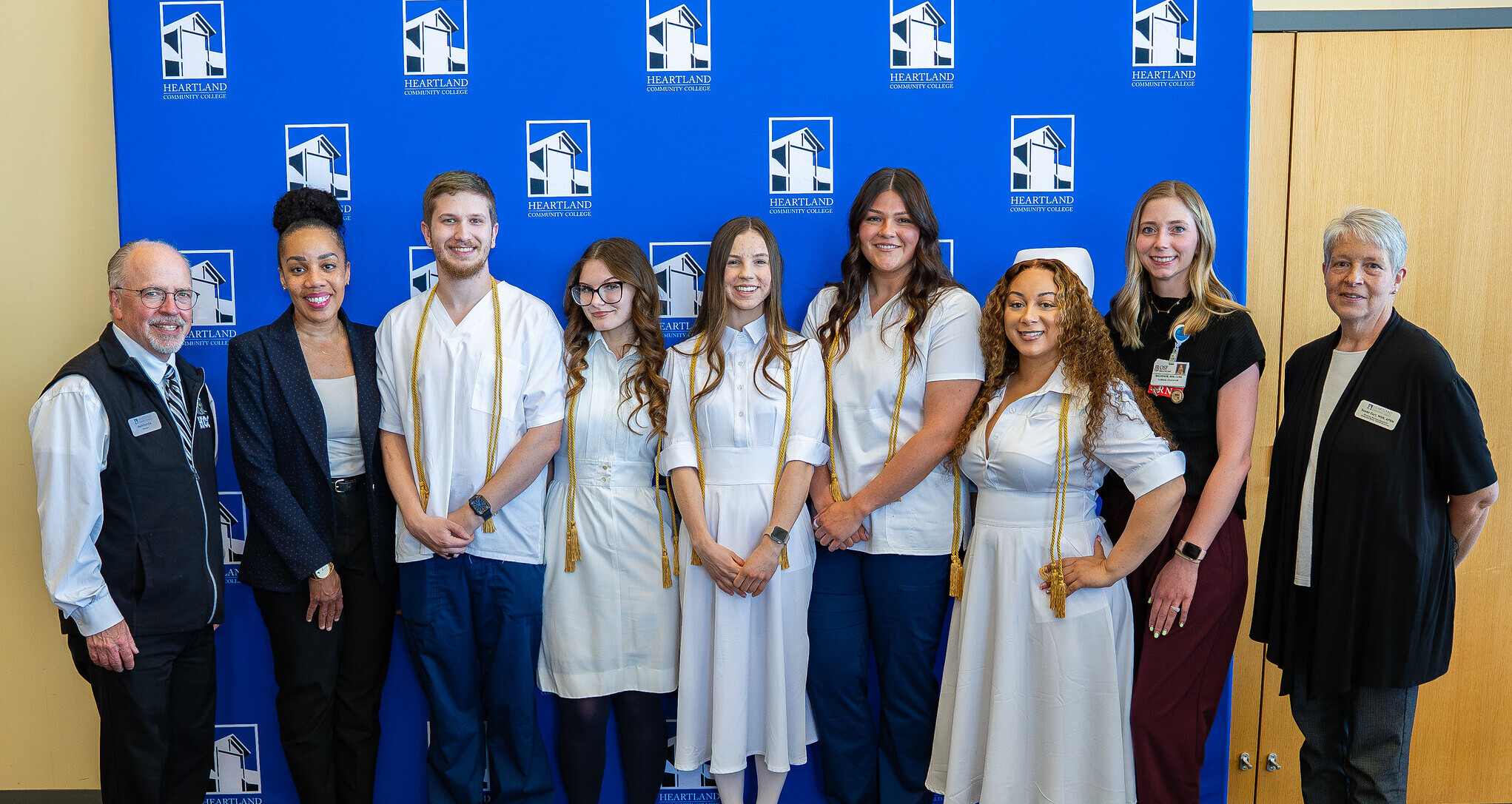
Nursing is a field that requires compassion, technical skill, and scientific aptitude. As a nurse, you are challenged daily to think critically in a science-based and technical environment. You will provide expert care to help people stay healthy and restore health for those who are injured or ill. Nurses take on many important roles.
There are many reasons to study nursing at Heartland Community College:
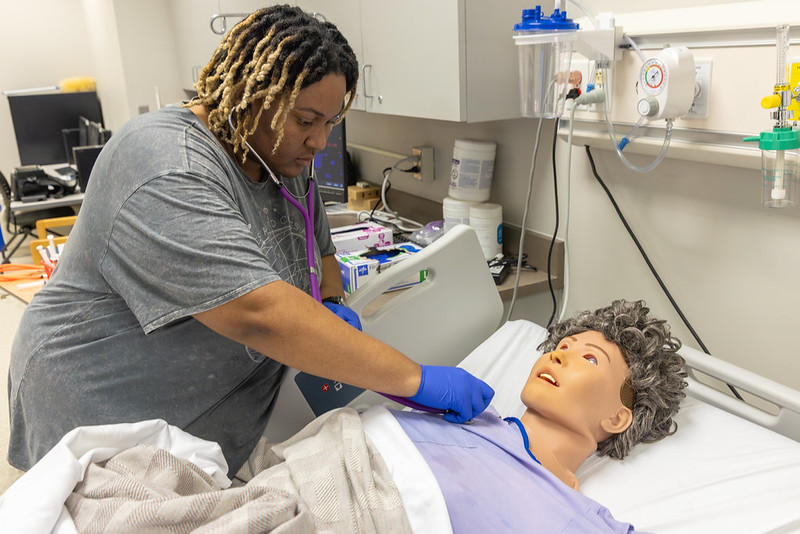
Graduates work in a variety of specialties, including intensive care, medical oncology, surgery, neonatal ICUs, and maternal-child health. Many continue their education and pursue careers as nurse practitioners, educators, nurse anesthetists, and more.
| Year | First-Time Examination Pass Rate | Ultimate Pass Rate |
|---|---|---|
| 2025 | 25/35 (71.4%) | 35/35 (100%) |
| 2024 | 31/38 (81.5%) | 37/38 (97.3%) |
| 2023 | 36/37 (97.3%) | 37/37 (100%) |
*Further information on HCC nursing pass rates (PDF)
| Program Type | 2023 | 2024 | 2025 |
|---|---|---|---|
| Aggregate | 70% | 74% | 80% |
| Traditional | 69% | 68% | 76% |
| LPN to ADN | 73% | 100% | 100% |
Completion rates reflect the percentage of students who complete the Nursing Program in the prescribed two-year sequence without interruption.
Graduate survey data and employment tracking reflect the following job placement rates:
| Year | Placement Rate | Number Employed / Total Graduates |
|---|---|---|
| 2025 | 100% | 23/23 |
| 2024 | 96% | 23/24 |
| 2023 | 95% | 35/37 |
The Associate in Applied Science – Nursing program at Heartland Community College located in Normal, Illinois is accredited by the Accreditation Commission for Education in Nursing.
3390 Peachtree Road NE, Suite 1400, Atlanta, Georgia 30326; phone 404-975-5000; contact ACEN
The most recent accreditation decision made by the ACEN Board of Commissioners for the Associate in Applied Science – Nursing program is continuing accreditation.
Passing the National Council of State Boards of Nursing Exam – RN (NCLEX-RN) is required for licensure as a Registered Nurse (RN) in Illinois. The following statements must be answered by applicants seeking licensure in the State of Illinois. If you answer "yes" to any of the questions, you may be required to go through a due process prior to issuance of a license, but this should not deter you from applying to the nursing program. Please discuss any questions with the Director of Nursing Education for specific guidance.
Instructor
Teaches: Nursing

Associate Professor
Teaches: Nursing
Associate Professor
Teaches: Nursing
Adjunct Instructor I
Teaches: Nursing
Adjunct Instructor I
Teaches: Nursing
Assistant Professor
Teaches: Nursing
Adjunct Instructor I
Teaches: Nursing
Adjunct Instructor II
Teaches: Nursing
Adjunct instructor I
Teaches: Nursing
Adjunct Instructor I
Teaches: Nursing
Assistant Professor
Teaches: Nursing
Associate Professor
Teaches: Nursing
The following statements must be answered by applicants seeking licensure in the State of Illinois. If you answer "yes" to any of the questions, you may be required to go through a due process prior to issuance of a license.
The above information should not deter you from applying for the nursing program. Please discuss any questions with the Director of Nursing Education for specific guidance.
The Associate in Applied Science (AAS) Nursing program at Heartland Community College meets the state education requirements for a Registered Nurse license in the State of Illinois. Heartland Community College has not determined if the AAS Nursing program meets the state education requirements in any other state, any U.S. Territory, or the District of Columbia. Contact the state regulatory agency for nursing in any other state for which this information is needed.
68 credit hours, Catalog Year 2025-2026, Program Prerequisite: NURS 110
| General Education Requirements | |
|---|---|
| Course | Hours |
| ENGL 101 – Critical Reading & Writing |
3 |
| ENGL 102 – Multimodal Composition |
3 |
| COMM 101 – Introduction to Oral Communication |
3 |
| BIOL 181 – Anatomy & Physiology I |
3 |
| PSY 101 – Introduction to Psychology |
3 |
| SOC 101 – Sociology |
3 |
| BIOL 182 – Anatomy & Physiology II |
4 |
| BIOL 191 – Introductory Microbiology |
4 |
| Total Credit Hours |
27 |
| Nursing Program Requirements | |
|---|---|
| Course | Hours |
| NURS 112 – Introduction to Nursing |
1 |
| NURS 113 – Medication Principles for Nurses |
2 |
| NURS 117 – Nursing Care Concepts: Fundamentals |
8 |
| NURS 122 – Community-Based Nursing |
1 |
| NURS 134 – Nursing Care Concepts: Chronic Adult |
4.5 |
| NURS 135 – Nursing Care Concepts: Family Health |
4.5 |
| NURS 232 – Leadership & Management in Nursing |
1 |
| NURS 240 – Nursing Care Concepts: Mental Health |
4 |
| NURS 241 – Nursing Care Concepts: Acute I |
4 |
| NURS 242 – Contemporary Nursing |
1 |
| NURS 245 – Nursing Care Concepts: Acute II |
5 |
| NURS 246 – Nursing Care Concepts: Acute III |
5 |
| Total Credit Hours |
41 |
| Semester 1 - Fall | |
|---|---|
| Course | Hours |
| BIOL 181 – Anatomy and Physiology I |
4 |
| NURS 112 – Introduction to Nursing |
1 |
| NURS 113 – Medication Principles for Nurses |
2 |
| NURS 117 – Nursing Care Concepts: Fundamentals |
8 |
| PSY 101 – Introduction to Psychology |
3 |
| Semester 2 - Spring | |
|---|---|
| Course | Hours |
| BIOL 182 – Anatomy & Physiology II |
4 |
| ENGL 101 – Critical Reading and Writing |
3 |
| NURS 122 – Community-Based Nursing |
1 |
| NURS 134 – Nursing Care Concepts: Chronic Adult |
4.5 |
| NURS 135 – Nursing Care Concepts: Family Health |
4.5 |
| Summer Session | |
|---|---|
| Course | Hours |
| NURS 122 – Community-Based Nursing |
1 |
| NURS 231 – LPN to ADN Transition |
2 |
| Total |
3 |
| Semester 1 - Fall | |
|---|---|
| Course | Hours |
| BIOL 191 – Introductory Microbiology |
4 |
| ENGL 102 – Composition II |
3 |
| NURS 232 – Leadership & Management in Nursing |
1 |
| NURS 240 – Nursing Care Concepts: Mental Health |
4 |
| NURS 241 – Nursing Care Concepts: Acute I |
4 |
| Total |
16 |
| Semester 2 - Spring | |
|---|---|
| Course | Hours |
| COMM 101 – Introduction to Oral Communication |
3 |
| NURS 242 – Contemporary Nursing |
1 |
| NURS 245 – Nursing Care Concepts: Acute II |
5 |
| NURS 246 – Nursing Care Concepts: Acute III |
5 |
| SOC 101 – Sociology |
3 |
| Total |
17 |
Information about the Criminal Background Check policy, Drug Screening Policy, required immunizations, and clinical health requirements can be found in the Program Handbook. To discuss any questions or concerns, please email the Director of Nursing Education.
The College provides equal educational opportunities to all students and equal employment opportunities to all employees and applicants for employment. Management and supervisory personnel at all levels are responsible for taking reasonable and necessary actions to prevent discrimination. Discrimination is prohibited under Americans with Disabilities Act of 1990, the Rehabilitation Act of 1973, Title IX of the Education Amendments of 1972, the Violence Against Women Act of 1994, Title VII of the Civil Rights Act of 1964, the Age Discrimination in Employment Act of 1967, the Illinois Human Rights Act, and all other relatable laws, rules and regulations that apply to College operations.
The Nursing Program at Heartland Community College is a selective admission program. Program enrollment is limited to 40 students per year. Admission is based on achievement of minimum academic criteria and the quality of the applicant's credentials in relation to those of other applicants.
Heartland Community College's Nursing Program does not accept transfer credit from other nursing programs. All prospective students must follow the application guidelines listed above. Applications are accepted only during the Nursing Program’s open application period (October 1st through March 1st). Licensed Practical Nurses wishing to complete an Associate Degree in Nursing may apply for advanced placement in the LPN to ADN Program.
All non-nursing credits are subject to Heartland Community College's transfer policy.
Call or visit an academic advisor for assistance with course selection and the application process.
Information Meetings provide an overview of the Nursing Program admission process. Though attendance is not mandatory, these meetings provide an opportunity to ask questions of Admissions and Nursing Program staff and are intended to help make the application process as smooth as possible for prospective students. All information meetings are held at the main campus in Normal, IL, unless otherwise noted.
Step 1. Apply to Heartland Community College. (Current HCC students do not need to reapply.)
Step 2. Apply to the Associate Degree Nursing Program. Application only available October 1 - March 1*
*Applications may be reopened at a later date if seats remain available.
Step 3. Take the Test of Essential Academic Skills (TEAS)
The ATI TEAS is only offered online.
Study materials are available at the Heartland Library or they may be purchased at the TEAS prep page.
Students may retake the ATI TEAS one time through Heartland within the application period. The highest grade within the application period will be used for evaluation. TEAS scores are valid for two application cycles.
A minimum composite score of 58.7% or Proficient on the TEAS is required to be considered for admission to the program.
Contact nursing.admissions@heartland.edu with any TEAS-related technical concerns or date/time conflicts.
Step 1. Apply to Heartland Community College
Step 2. Apply to the Associate Degree Nursing Program. Application only available October 1-March 1*
*Applications may be reopened at a later date if seats remain available.
Step 3. Take the Test of Essential Academic Skills (TEAS)
The ATI TEAS is only offered online.
Study materials may be purchased at the ATI website.
Students may retake the ATI TEAS one time through Heartland within the application period. The highest grade within the application period will be used for evaluation. TEAS scores are valid for two application cycles.
The Nursing Program at Heartland Community College is a selective admission program. Program enrollment is limited to 40 students each fall, and admission is based on achievement of minimum academic criteria and the quality of the applicant's credentials in relation to those of other applicants.
Contact Financial Aid for information about scholarships or other assistance with program costs.
The cost table below is a reference to provide information related to potential expenses incurred by the prospective student in the HCC Nursing Program. The totals may vary depending on previous completion of general education courses and costs associated with immunizations and tests. The fees associated with a criminal background check and drug screening are estimates and are paid directly to the company performing the checks/screens. The state license fee and NCLEX application and exam fees are for reference only and are not paid to Heartland Community College. If you elect to take the test and become licensed in a different state, you will be responsible for determining those fees. Travel fees are related to clinical education and vary depending on location (generally held to within 90 miles of HCC) and current fuel costs.
There are a variety of health requirements and immunizations required by our clinical partners.
*All tuition, fees, and cost estimates are subject to change without notice.
| Fees | |
|---|---|
| Fee | Cost |
| Tuition & Fees: full ADN program (at $185/credit hour) – does not include course-specific lab fees |
$13,690 |
| Tuition & Fees: full LPN program (at $185/credit hour) – does not include course-specific lab fees |
$7585 |
| Pre-entrance criminal background check and drug screening (Viewpoint Screening registration) |
$103 |
| Pre-entrance ATI TEAS exam |
$80 |
| Pre-entrance physical, immunizations, and lab work (titers) |
varies |
| Books (costs depend on new/used and rent/buy options chosen) |
$600-$1100 |
| Uniform and HCC Nursing patch (shoes are an additional cost) |
$80-$100 |
| Stethoscope (cost varies by brand and function) |
$30-$100 |
| BLS/CPR for Healthcare certification |
$92 |
| Personal health insurance (student's responsibility) |
varies |
| NCLEX review course after the program (depends on length and learning format) |
$100-$500 |
| NCLEX application & exam fee |
$307 |
| LiveScan criminal background check for NCLEX examination |
$54-$56 |
| State of Illinois license fee |
$60 |
| Travel to clinical sites |
varies |
| Graduation pin |
$35-$100 |
Yes, if you are caring, compassionate, accept responsibility, use good judgment, have initiative as an adult learner, willing to be ethically and legally accountable for your actions, and respectful of rights of people of all ages, ethnic backgrounds, social status and religious beliefs.
Students applying for Regular Admission to the program must be a CNA and listed on the Illinois Public Health Registry (Health Care Worker Registry) or a graduate of Heartland Community College’s MA program. Students applying for Advanced Placement – Admission as an LPN do not have to be a CNA.
Applications for the Practical Nursing and Associate Degree Nursing programs may be submitted from October to March. Supporting documentation must be submitted by March 15. Check current application materials for the exact deadline dates. Evaluations are completed during March. Notification of acceptance or rejection is sent by April 15. Students admitted to the program begin classes the following summer or fall term.
Heartland offers a one-year Practical Nursing Certificate Sequence and a two-year Associate Degree Nursing Program Sequence. Both programs include general (non-nursing) courses as well as nursing courses. We strongly encourage students to complete all or most of the general (non-nursing) courses prior to being admitted to the nursing program. Also, students may need to take English, math or reading courses if placement testing indicates a student's skills are below college level in any of these areas, and students will need to take BIOL 099 if they do not have the prerequisite for Anatomy and Physiology I or if they have not previously completed the Anatomy and Physiology I course.
Once admitted to the program, Practical Nursing students take classes for two consecutive semesters and a summer term, completing coursework in July. The ADN students take classes for four consecutive semesters and graduate in May of their second year. The sequencing of nursing courses does not allow for a more rapid progression through the program even if general (non-nursing) courses have been completed prior to admission into the nursing program.
Yes, however applicants are encouraged to complete the majority of general (non-nursing) courses prior to enrolling in the nursing program.
Licensed Practical Nurses (LPNs) are technically trained nurses, according to the Illinois Nursing and Advanced Practice Act. They practice nursing under the supervision of an RN or other health care professional. Registered Professional Nurses (RNs) are nurses who use their professional knowledge, judgment, and skills in the assessment and implementation of the nursing process to meet patient and family needs.
There have been groups in the past that felt that there was no longer a place for LPNs in nursing. At present, LPNs are working in almost every area and type of nursing imaginable, and it is our belief that this trend will continue.
The two-year Associate Degree Nursing is usually completed at a community college while the four-year Bachelor of Science in Nursing is completed at a four-year college or university. Students with an ADN and a BSN sit for the same NCLEX-RN exam to become Registered Professional Nurses. For entry-level jobs, there may be no pay difference between the two, although some employers may prefer Bachelor’s prepared nurses or may require a BSN for advancement into management positions. Heartland nursing graduates are employed in a wide variety of settings: hospitals, long-term care facilities, hospice, home care, clinics, schools, industry, physicians' offices, and churches.
To be eligible for admission, students must test into college-level math or take the appropriate courses to reach college-level math by March 15. The college placement test will tell you and your advisor if you need some assistance in meeting the nursing admissions requirement.
NURS 113 requires students to complete math calculations. In addition, all other nursing classes will include dosage calculation questions on exams.
Most clinicals are in the Bloomington/Normal area and include Carle BroMenn Medical Center, OSF St. Joseph Medical Center, and various other ambulatory or long-term care facilities. A limited amount of travel will be required to sites in Lincoln, Peoria, Pontiac, and/or Springfield for some specialized clinical experiences.
Heartland does not carry over a waiting list of qualified applicants from year to year. Qualified students who are not admitted need to submit a new application the following year so that we are aware of their continued interest in the program.
Find more information about the Nursing Program in the Nursing Handbook.